

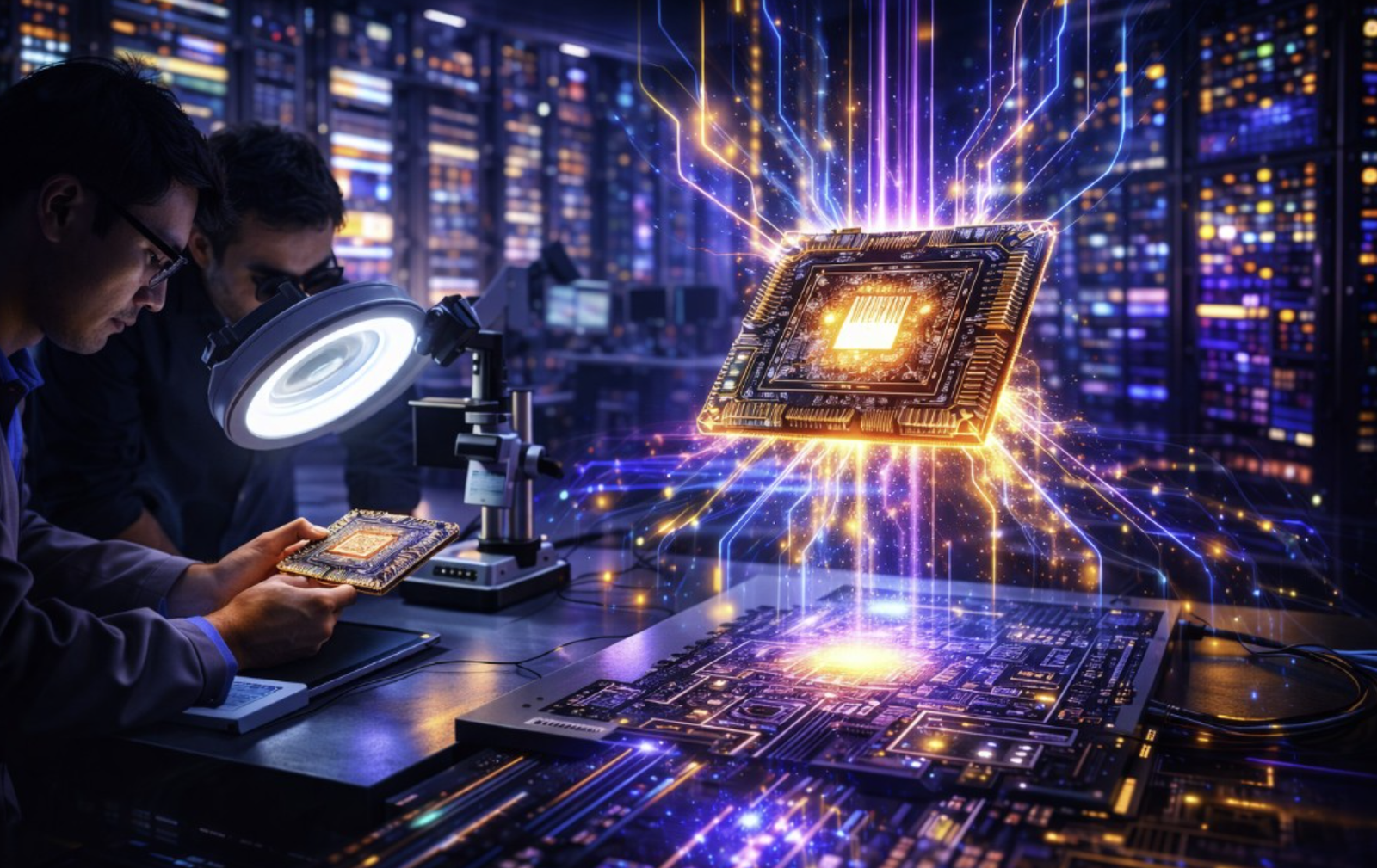
Big Tech building its own AI chips isn’t just a technical upgrade it’s a strategic shift driven by one simple reality: control. For the last few years, Nvidia has become the backbone of the AI boom. Supplying the GPUs that power everything from large language models to enterprise automation systems. That dominance has turned Nvidia into one of the most important companies in the world, but it has also created a dependency that companies like Apple, Google, and Amazon are no longer comfortable with.
At first, relying on Nvidia made sense. Building AI infrastructure is expensive, complex, and time-consuming, and Nvidia was already years ahead in both hardware and software ecosystems. But as AI became central to nearly every product and service, that reliance started to look less like a convenience and more like a risk. When one supplier controls the critical layer of your business, your ability to scale, price, and innovate is ultimately tied to them.
That’s where the shift toward in-house chip development begins to make sense. Companies are no longer just building software they’re building full-stack ecosystems. By designing their own chips, they can optimize performance for their specific workloads, reduce long-term costs, and remove a major bottleneck in deployment. More importantly, they gain independence. Instead of waiting in line for limited GPU supply or paying premium prices, they can control their own infrastructure from the ground up.
This is already happening across the industry. Apple has spent years refining its custom silicon strategy, integrating hardware and software in a way that gives it tighter control over performance and efficiency. Google has invested heavily in its own tensor processing units to power its AI services internally. Amazon is developing custom chips to support its cloud and AI offerings at scale. These aren’t side projects they are long-term bets on owning the most critical layer of the AI stack.
The implications go beyond cost savings. When companies control their own chips, they can move faster. They can tailor systems specifically to their products, experiment more freely, and build features that competitors relying on third-party hardware may struggle to match. Over time, this creates a compounding advantage. Performance improves, margins expand, and dependency shrinks.
What’s interesting is that this mirrors a pattern we’ve seen before in tech. The most dominant companies tend to move vertically. They don’t just build on top of existing infrastructure they start owning it. Whether it was operating systems, cloud platforms, or mobile ecosystems, control has always been the ultimate leverage point. AI hardware is simply the next layer where that battle is being fought.
For smaller companies and startups, this shift is a signal rather than a barrier. It shows where the real value is moving. While most businesses won’t be designing their own chips, they will need to think more carefully about the infrastructure they depend on. The closer a capability is to the core of your business, the more risky it becomes to outsource entirely.
The bigger picture is clear. AI is no longer just a feature it’s becoming foundational. And when something becomes foundational, control over it becomes non-negotiable. Big Tech isn’t building its own chips because it wants to. It’s doing it because, in the long run, it has no choice.
